How Much Insulation Do I Need in My Attic for Energy Savings?
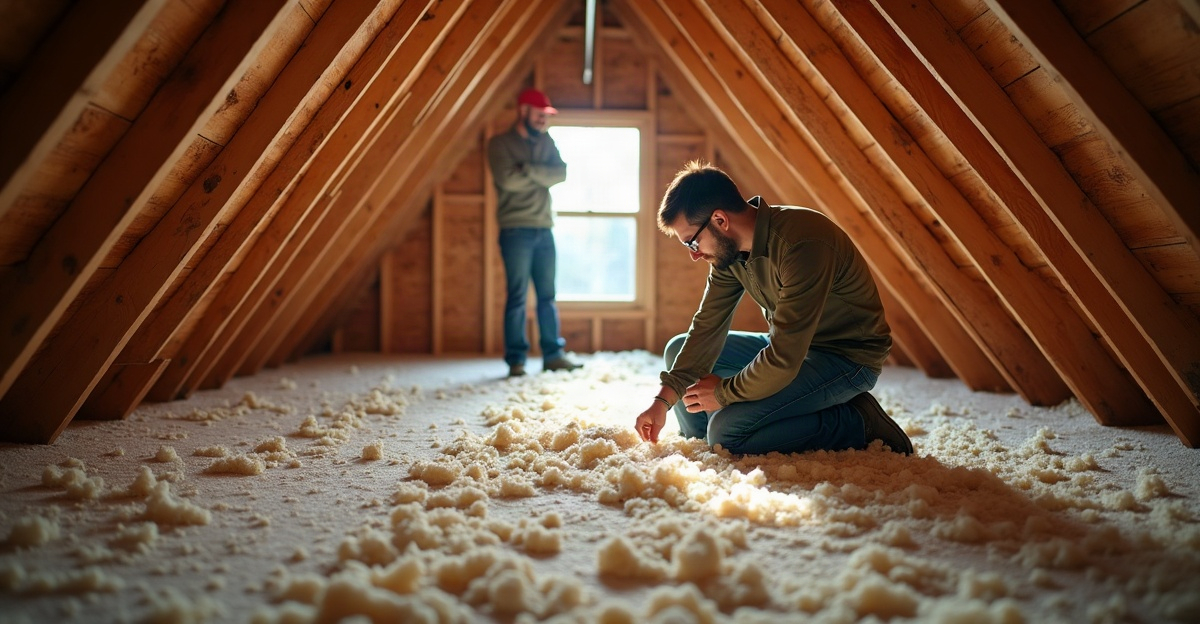
For Central Mississippi homes, the attic insulation amount we need depends on the total R-value target, existing insulation, and attic conditions. We should also inspect air leaks, moisture, ventilation, and ductwork. Many homes benefit from a total attic insulation level of R-38 to R-49. This range limits heat transfer, improves comfort, and can lower heating and cooling costs.
Key Takeaways
- Attic insulation needs vary by home, but R-38 to R-49 provides a practical target range for many Central Mississippi properties.
- We can determine how much insulation to add by subtracting the current R-value from the target R-value.
- Insulation depth varies by material. Blown fiberglass usually requires greater depth than blown cellulose.
- We should address air leaks, moisture concerns, ventilation problems, and damaged ducts before adding insulation.
- Existing insulation can often stay in place if it remains dry, clean, evenly spread, and free from contamination or significant damage.
The Right Attic Insulation Level for Central Mississippi Homes
For Florence and Central Mississippi homes, the answer starts with total R-value, not one universal number of inches. Many homes may benefit from attic insulation in the general R-38 to R-49 range, although the right level depends on local requirements, attic design, existing insulation, access, and the home’s condition.
R-value measures resistance to heat flow. Higher R-values slow heat movement more effectively. In Central Mississippi, that matters during long, hot, humid summers and occasional winter cold spells. Proper attic insulation can reduce unwanted heat transfer, improve indoor comfort, and may help reduce heating and cooling costs. Results also depend on air leaks, HVAC condition, thermostat settings, utility rates, ductwork, and the insulation already in place.
For homeowners asking, “How much insulation do I need in my attic?” we use a simple process:
- Identify the target R-value.
- Determine the R-value already present.
- Add enough insulation to close the difference.
For example, an attic with approximately R-19 insulation that needs to reach R-38 requires roughly R-19 more insulation. Product specifications, insulation condition, and attic details can change the final recommendation. Our guide to insulation meaning explains how insulation controls heat flow throughout a home.
Approximate Insulation Depth Needed for R-38 or R-49
Insulation depth is an estimate, not a final specification. Product density, installation quality, manufacturer requirements, and settling all affect the depth needed. We always recommend using the coverage chart supplied for the selected insulation product.
The following installed or settled-depth ranges provide a practical starting point:
- Fiberglass batts: Approximately 10 to 14 inches for R-38, depending on the product. Approximately 13 to 18 inches for R-49, depending on the product.
- Blown fiberglass: Approximately 14 to 18 inches for R-38, depending on the product and coverage chart. Approximately 18 to 23 inches for R-49, depending on the product and coverage chart.
- Blown cellulose: Approximately 10 to 12 inches of settled depth for R-38, depending on the product. Approximately 13 to 15 inches of settled depth for R-49, depending on the product.
Blown insulation does not have one fixed depth. Cellulose can settle over time, so installers account for the difference between installed depth and final settled depth. That detail helps ensure the insulation still provides the intended R-value after installation.
For the question, “How much blown insulation do I need in my attic?” there are two parts to the answer: the required total R-value and the material amount needed to reach that R-value. Bag quantities depend on attic square footage, the target R-value, the product coverage chart, and installed-versus-settled depth. We do not recommend using a generic bag count without measurements and product details.
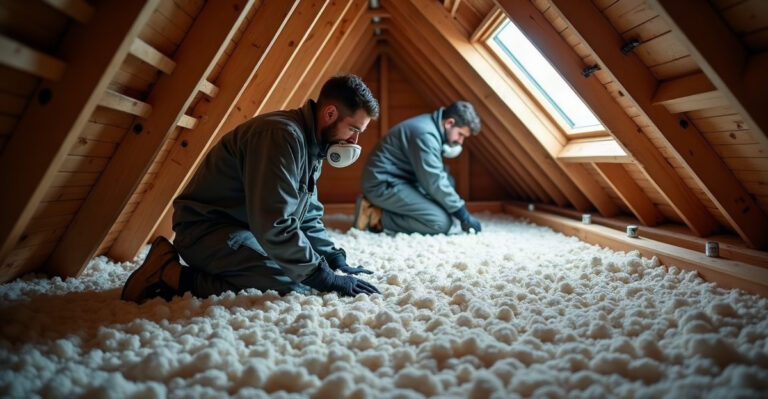
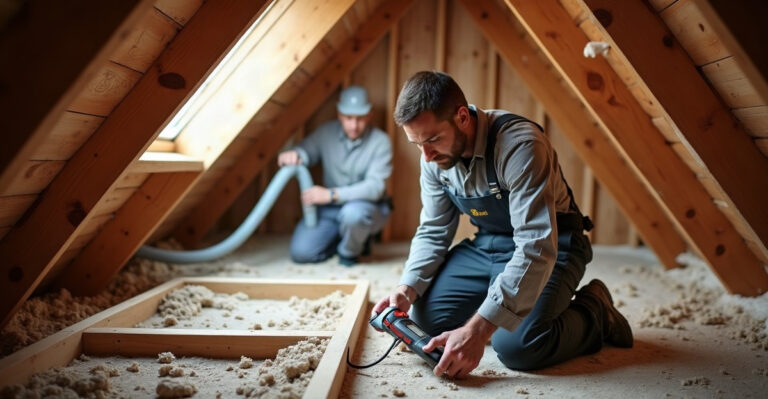
A reliable calculation starts by measuring attic square footage, estimating the existing insulation type and depth, checking its condition, selecting a target R-value, and reviewing the manufacturer’s coverage chart. For accurate results, our blown-in attic insulation team can measure the attic and recommend the correct coverage.
Blown fiberglass often provides even coverage around wiring, framing, and other attic obstructions. Blown cellulose fills irregular spaces well, but installers must account for settling. Fiberglass batts can work in accessible areas with regular framing, provided they fit correctly and remain uncompressed. Spray foam may suit certain attic assemblies or air-sealing needs, although roof design and ventilation require careful evaluation.
Check Existing Insulation and Fix Attic Problems First
New insulation performs best after we address air leaks, moisture, safety issues, and ventilation concerns. Adding material over major gaps can limit comfort and energy-saving results because air can still move freely between the living space and attic.
Safe Attic Inspection Basics
Before measuring insulation, we recommend taking safety seriously:
- Look for insulation-depth markers, if present.
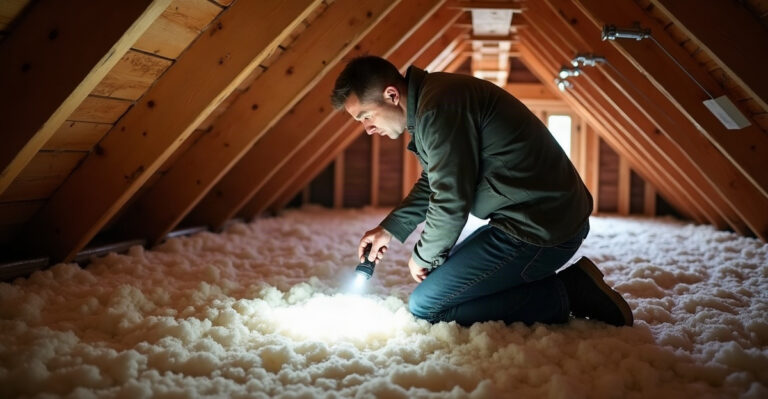
- Measure insulation in several locations without compressing it.
- Note thin, uneven, wet, matted, contaminated, or severely compressed areas.
- Never step between ceiling joists. Use secure walk boards where appropriate, or contact a professional.
- Avoid disturbing suspected mold, animal waste, asbestos-containing materials, or unsafe electrical fixtures.
- Check that soffit vents and ventilation baffles remain open and unobstructed.
- Do not bury unsafe heat-producing fixtures beneath insulation.
Common air-leak locations include attic hatches, plumbing stacks, wiring penetrations, top plates, recessed lights, chimney or flue penetrations, duct openings, and wall chases. These areas often need air sealing before insulation goes in.
Chimneys, flues, and heat-producing fixtures require proper clearances. Electrical fixtures also need evaluation before insulation covers the surrounding area. We recommend professional help whenever safety details are uncertain.
Roof leaks, plumbing leaks, attic humidity, condensation, and wet insulation need correction before insulation work begins. More insulation will not solve a moisture problem. Ductwork in the attic also deserves attention because leaking, poorly insulated, or poorly placed ducts can reduce comfort and HVAC efficiency.
When Existing Insulation Can Stay and When Removal Is Needed
Old insulation does not automatically need removal because of its age. We can often add insulation over existing material when it is dry, clean, relatively even, free of pest contamination, and not severely compressed or deteriorated.
Covering wet, moldy, contaminated, or damaged insulation with new material is not a good solution. Those conditions can trap odors, hide moisture damage, and create ongoing indoor air quality concerns.
Professional assessment or insulation removal is appropriate after roof or plumbing leaks, rodent or wildlife activity, smoke damage, severe compaction, major deterioration, persistent odors, mold concerns, or attic sanitization needs.
We correct the source of moisture, pest activity, leakage, or ventilation trouble before installing replacement insulation. An attic assessment can determine whether a home needs air sealing, an insulation top-up, removal, sanitization, ventilation repairs, ductwork improvements, or a combination of these services.
How Much Insulation Do I Need in My Garage Attic?
The answer to “How much insulation do I need in my garage attic?” depends on how the garage connects to the home. A garage attic should not automatically receive the same insulation plan used above the main living area.
The right approach depends on whether the garage is attached or detached, whether conditioned living space sits above it, whether ducts run through the attic, and how walls, ceilings, chases, and fire separation are built. Building-code and fire-separation considerations can also affect the work.
For a conditioned room above an attached garage, the garage ceiling and floor assembly below that room often deserves priority. Proper insulation and air sealing can help reduce cold or hot floors, drafts, and temperature differences.
Ducts in a garage attic may need special attention. Heat gain, duct leakage, missing duct insulation, and poorly sealed connections can affect HVAC efficiency and comfort throughout the home. We do not recommend blocking required vents, compromising fire separation, or assuming that the main attic’s R-value and installation method will work in the garage.
A site-specific assessment is especially valuable for garage attics with ducts, finished rooms above, limited access, unusual rooflines, moisture concerns, or possible code-related requirements.
DIY or Professional Installation: When to Get an Attic Assessment
DIY attic insulation can work in a dry, open, uncomplicated attic with safe access. You still need to air seal correctly, follow product instructions, use the proper coverage chart, and maintain all electrical, ventilation, and clearance requirements.
Professional help is the better choice for contaminated insulation, tight attic access, moisture or roof leaks, ductwork concerns, complicated rooflines, electrical hazards, recessed lights, chimneys, flues, ventilation trouble, garage fire-separation issues, or precise R-value calculations.
Is R-30 Enough Insulation for an Attic in Mississippi?
R-30 may fall below the general R-38 to R-49 range that many Central Mississippi homes may benefit from. The correct target still depends on local requirements, attic design, existing insulation, and home conditions.
How Many Inches of Blown Insulation Equal R-38 or R-49?
The answer depends on the material and manufacturer coverage chart. Blown fiberglass generally needs more inches than blown cellulose, and cellulose settling must be included in the calculation.
Can New Insulation Go Over Old Attic Insulation?
Often, yes. Existing insulation can remain if it is dry, clean, free from pest contamination, and not severely damaged or compressed.
Should Old Insulation Be Removed Before Adding More?
Not always. Removal is generally appropriate for wet, moldy, contaminated, smoke-damaged, severely deteriorated insulation or material associated with persistent odors.
Does Attic Insulation Help With Mississippi Summer Heat?
It can reduce unwanted heat transfer and may improve comfort during the hot, humid cooling season, particularly when paired with air sealing and proper ventilation.
Florence-area and Central Mississippi homeowners can request a free estimate from Green Leaf Insulation. Our attic assessment identifies current insulation levels, air leaks, moisture or contamination issues, ventilation concerns, and the insulation recommendation that best fits the home.