
What Removal and Replacement Covers
This is the full-attic version of the job: everything currently up there is cleared out, the space is inspected while empty, and new insulation is installed to a proper depth. It applies when the existing material is too far gone to build on.
The advantage of doing both stages together is the window in between. With the attic bare, anything that needs attention can be dealt with before it disappears under a new layer.
Who Is This Service For?
This suits homeowners whose attic needs starting again rather than topping up.
- Attics with old, compacted or deteriorated insulation
- Homes affected by roof leaks or moisture damage
- Attics contaminated by rodent activity
- Properties being renovated or prepared for sale
- Homes where insulation has never performed well
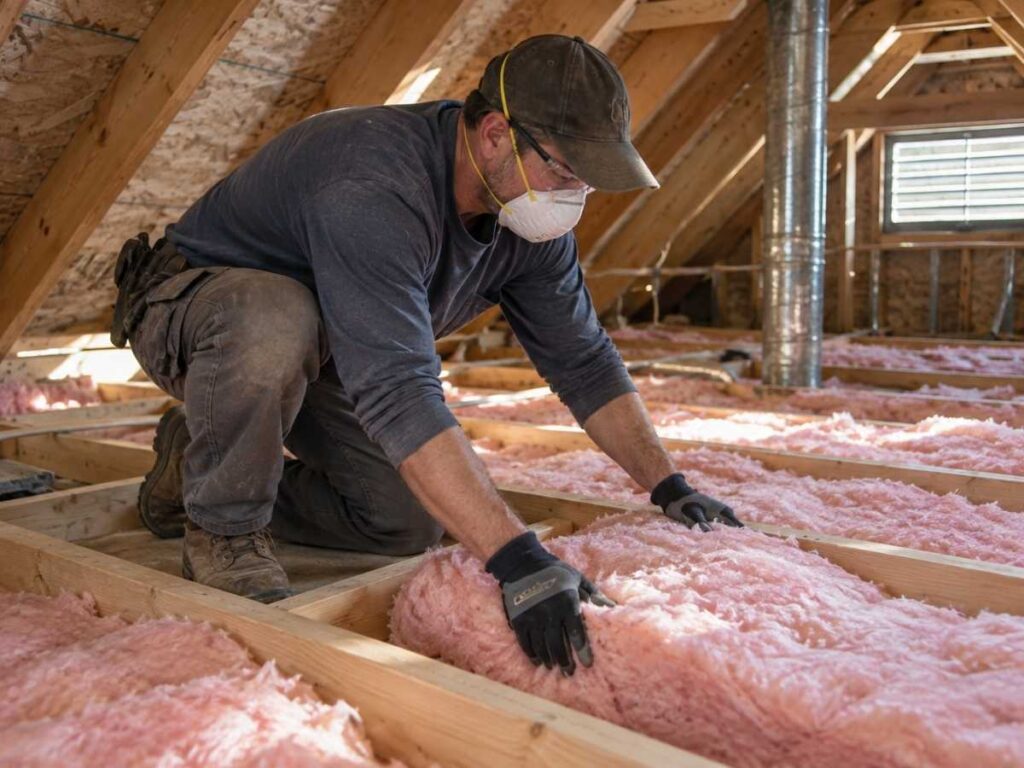
What to Expect From a Removal and Replacement Project
The project runs in clear stages, and you will know which stage you are at throughout. Removal comes first, then an inspection of the empty attic, then installation of the new material to an agreed depth.
Doing it in one continuous project also means the attic is not left open and uninsulated for weeks while you arrange a second contractor.
How the Project Runs
Here is the sequence from assessment through to a finished attic.
- Assessment and recommendation — We confirm the existing insulation genuinely needs replacing rather than topping up.
- Containment and removal — Access is protected, then the old material is vacuumed or bagged out and taken away.
- Empty attic inspection — With the space clear, we check the decking and framing for damage, gaps and anything needing attention.
- Any preparatory work — Issues found during the inspection are discussed with you before new insulation covers them.
- New insulation installed — Fresh material is installed to an even depth across the attic floor.
- Final walkthrough — We clean up the access area and show you the finished result.
Choosing the New Insulation
The replacement material is a decision worth making deliberately rather than defaulting to whatever came out.
- Blown-in insulation — Usually the practical choice for attic floors, since it settles around framing and into corners.
- Batt insulation — Better suited to regular, accessible cavities, and more commonly used in walls than attic floors.
- Depth over material type — Getting the depth right across the whole space matters more than the specific product chosen.
- Your attic decides — Layout, clearance and access all influence which option makes sense for your home.
How Removal and Replacement May Help Your Home
Replacing a failed attic layer rather than covering it is the difference between fixing a problem and hiding it. Insulation installed over damp or contaminated material rarely performs the way it should.
How much difference the finished work makes depends on the house, so we describe what the attic will have rather than promising a number.
What Homeowners Commonly Notice
These are the outcomes people most often report after a full replacement.
- A properly performing attic layer — New insulation at a consistent depth may work considerably better than a degraded layer topped up.
- Problems addressed rather than covered — Leaks, gaps and contamination get dealt with while the attic is accessible.
- More even temperatures through the house — Rooms directly below the attic tend to show the difference first.
- Confidence in what is up there — You know exactly what was installed, to what depth, and what condition the attic is in.
Removal and Replacement at Green Leaf Insulation
The most useful part of this service is the inspection nobody else sees. With the attic empty, we can point out roof staining, unsealed gaps and rodent damage that would otherwise be buried under new material for another twenty years.
Keeping both stages with one owner-operated team also removes the usual argument about who is responsible for what. The people who cleared the attic are the people who insulated it.
Frequently Asked Questions
Is removal and replacement always necessary, or can I just add more insulation?
Adding more is often the better answer when the existing insulation is dry, clean and simply thin. Full replacement makes sense when the material is contaminated, water damaged or heavily compacted. We assess the actual condition before recommending either path.
How long does insulation removal and replacement take?
Most residential projects are completed within one to two days, depending on attic size and access. Removal is generally the slower half, particularly where contamination is involved. You will get a specific timeframe as part of your estimate.
Can you do the removal and replacement on the same visit?
In many cases yes, since running both stages together is the point of the service. Larger attics or spaces needing sanitization between stages may run into a second day. We will confirm the schedule with you before starting.
What happens to the old insulation you remove?
It is contained as it comes out of the attic, taken away, and disposed of. Nothing is left in your yard or garage for you to deal with afterwards. Contaminated material is handled with extra care during removal.
How much does insulation removal and replacement cost in Florence?
The two main factors are the size of the attic and the condition of the existing material. Contaminated attics take longer to clear and may need sanitizing before new insulation goes in. Assessing the space is the only way we can give you an accurate figure.
Find Out Whether Your Attic Needs Replacing or Just Topping Up
These are two very different jobs at two very different costs, and the only way to know which you need is to look. We will give you a straight answer either way.