
What Batt Insulation Is and Where It Works Best
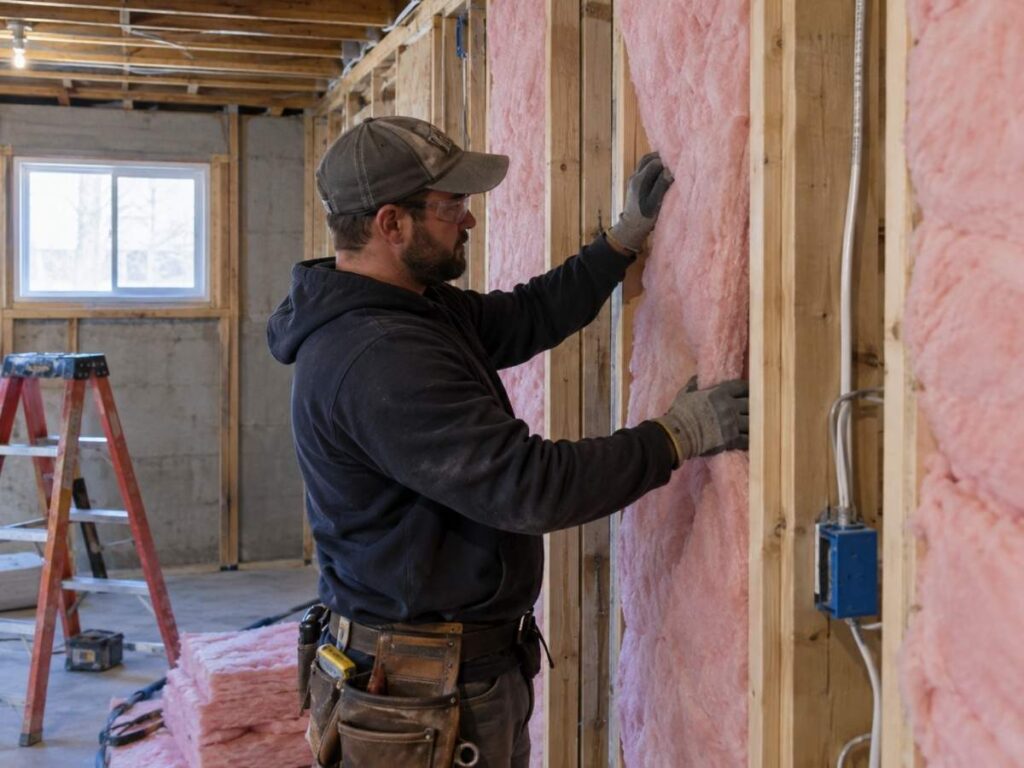
Batt insulation comes in pre-cut sections sized to fit between standard framing. Each piece is placed into the cavity, fitted around wiring and outlets, and left sitting flush rather than compressed or bunched.
Walls are where batts genuinely shine. Cavities are regular, accessible and framed to consistent widths, which is exactly the situation pre-cut material is designed for.
Who Is This Service For?
This service suits anyone with wall cavities currently open and accessible.
- Homeowners partway through a remodel
- New construction and home additions
- Interior walls being insulated for sound
- Under-insulated wall sections opened up for repair
- Builders and remodelers needing insulation fitted
What to Expect From a Batt Insulation Install
Timing is the main thing to plan around. Batts go in after framing, wiring and plumbing are complete but before drywall, so the window is usually well defined and worth booking ahead for.
The install itself is quick relative to attic work. Most of the skill is in the fitting rather than the speed.
How the Installation Runs
The process is straightforward once the cavities are ready.
- Confirming readiness — We check that framing, wiring and plumbing are complete so the cavities can be closed up afterwards.
- Measuring the cavities — Widths and heights are checked so the batts fit the actual framing rather than a standard assumption.
- Cutting and fitting — Sections are cut around outlets, boxes and pipe runs so material sits flush without gaps.
- Checking for compression — Batts are left at full thickness, since compressed material does not perform as intended.
- Site cleanup — Offcuts and packaging are cleared so the space is ready for the next trade.
How Batt Insulation May Help Your Home
Wall insulation does quieter work than attic insulation, but it affects how rooms feel and how sound carries between them. Interior walls in particular are often insulated for noise rather than temperature.
What it delivers depends on the wall, the construction and what was there before.
What Homeowners Commonly Notice
These are the differences people tend to report after wall cavities are insulated.
- Steadier temperatures in exterior rooms — Insulated walls may reduce how quickly a room follows the weather outside.
- Less sound between rooms — Interior wall batts are commonly used to soften noise transfer between bedrooms and living areas.
- Comfort in additions and extensions — New rooms often feel different from the rest of the house until the walls are properly insulated.
- A finished job you cannot revisit easily — Getting cavities right before drywall avoids opening walls again later.
Batt Insulation at Green Leaf Insulation
Fitting batts well is unglamorous work that shows up years later. Gaps around outlets, compressed sections behind pipework and material left short at the top of a cavity all undermine a wall that looked finished on the day.
Working around other trades is part of this service, and we would rather schedule around your builder than hold up the drywall. Tell us when the cavities will be ready and we will work to that.
Frequently Asked Questions
When during a remodel should batt insulation be installed?
Insulation goes in after framing, electrical and plumbing are complete, and before drywall is hung. That window is often short, so booking ahead avoids holding up the rest of the build. Let us know your schedule and we will fit around it.
Can batt insulation be used in attics as well as walls?
It can, but blown-in insulation is usually the better choice for attic floors because it settles around framing and into corners. Batts perform best in regular, accessible cavities like walls. We will recommend whichever suits the space you are insulating.
Do you install batt insulation in interior walls for soundproofing?
Yes, insulating interior walls is a common request during remodels. Batts in interior cavities are generally used to soften sound transfer between rooms rather than for temperature. It is worth deciding which walls matter to you before the drywall stage.
Do you work with builders and remodelers in Florence?
Yes, wall insulation is frequently part of a larger project run by someone else. We can coordinate directly with your builder on timing so the cavities are insulated without delaying the schedule. Being a small team makes scheduling around other trades relatively straightforward.
Is batt insulation better than wet-spray cellulose for walls?
Both work well in open cavities, and the right one depends on the wall and the project. Batts are quick to install and well suited to standard framing, while wet-spray cellulose fills irregular spaces more completely. We will talk through both options when we look at the job.
Book Wall Insulation Before the Drywall Goes Up
If your cavities are open or about to be, that is the moment to get insulation scheduled. Tell us where the project is at and we will work out timing with you.